Why Students in 2026 Need to Be More Financially Literate
Mar 31 , 2026
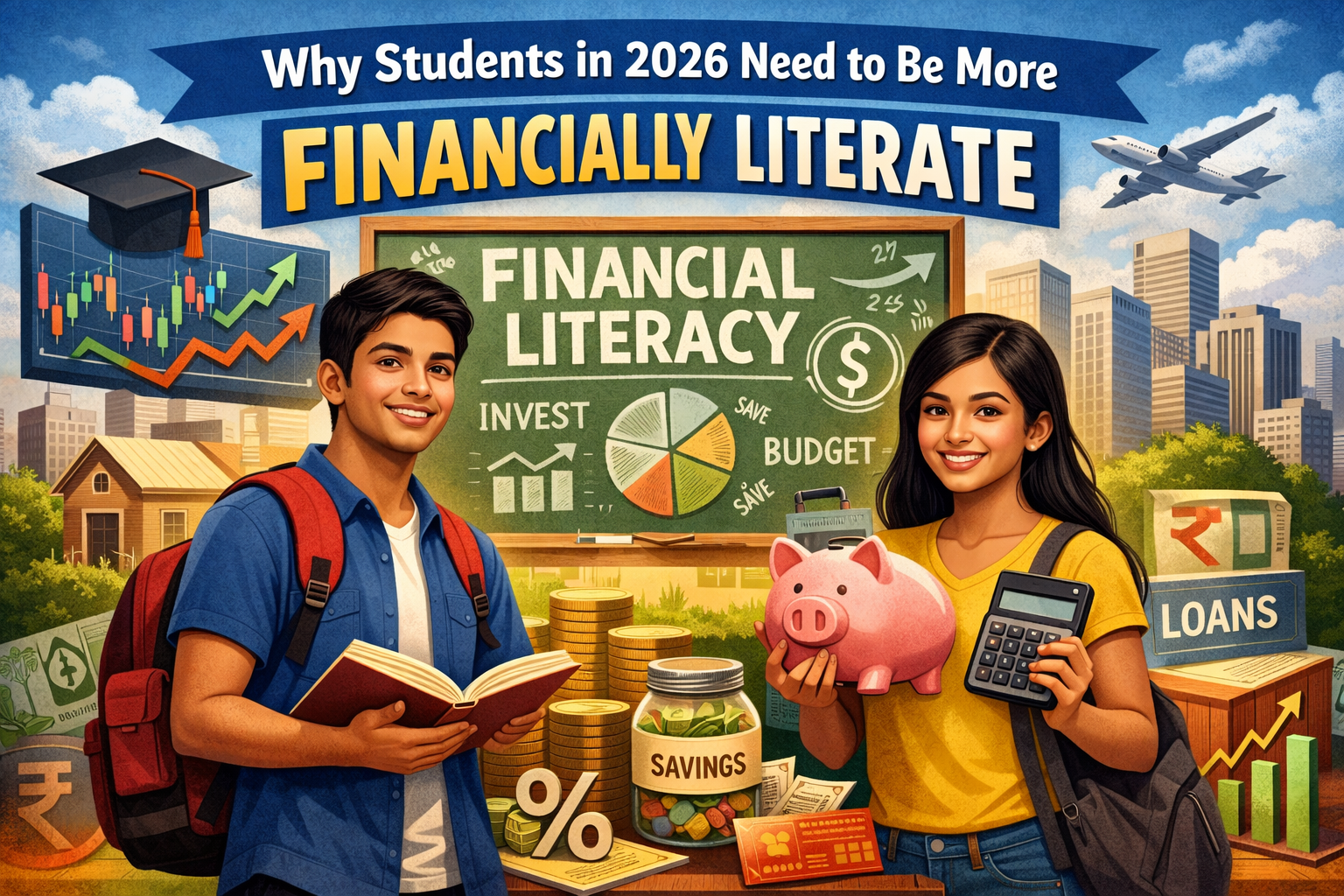
At school, we learn to perform mathematical equations, write compositions and learn about human anatomy. Yet there is one subject that applies to everyone after their 12th class - and it is not receiving the attention it deserves in schools. That subject is financial literacy.
Whether you are a student preparing for an entrance exam, a fresher starting your first job or a person going abroad for further education, it is crucial to know how to manage your finances. Some would even say it is as important as a degree.
What Is Financial Literacy?
Financial literacy is about knowing how to deal with our finances - how to save and invest, how to budget and how to take loans, and how to manage risks and avoid scams.
A financially literate person knows what is a need and what is a want. They know what an EMI is when taking a loan. They don't get confused with terms like inflation, interest rate, mutual fund and so on. Good financial literacy helps you make sound financial decisions throughout your life.
Why Indian Students Need Financial Literacy
We are in the midst of an economic revolution. With the rise of online payments, stock trading and fintech, financial services are now accessible to all, including students. By mid-2026, India will see more than 200 million demat accounts, given the speed at which students and young working professionals are participating in the markets.
Likewise, young students are borrowing money for education, taking credit cards and personal loans at a young age. Without financial knowledge, these can cause problems. A student taking a loan of Rs 10 lakhs for education but not knowing how to pay back the loan may lose almost twice the amount. Some basic financial education can alleviate years of trouble.
Finance as a Career
Finance is a potential career for many students.
The most popular courses after Class 12 are commerce, economics, chartered accountancy, MBA finance and banking. However, finance is no longer just a career. Digital assets, cryptocurrency and blockchain are now part of the global economy. Startups and companies in India are seeking professionals who can work with these markets - compliance analysts, crypto product managers, financial journalists, just to name a few.
Staying up to date is part of the job. If you are a student and want to keep up with developments in the digital financial markets and global economy, sites like CCN are a good site to check for the latest news and opinions about cryptocurrency and financial markets. This is the kind of information you can't learn from textbooks.
Essential Financial Terms for Students
Here's a list of some of the things students need to know:
Budgeting: 50% needs, 30% wants and 20% savings is often referred to as the 50-30-20 rule.
Compound interest: This is interest earned on both the original amount and the interest already collected. The earlier you start to save, the better.
Inflation Prices rise: A 100 rupee note is not worth the same today as it was a decade ago. So it's not enough to keep your money in a bank savings account because the value of your money will depreciate (decline) if it does not appreciate (increase).
SIPs and Mutual Funds: SIPs are a way to invest a particular amount every month (as little as ₹500) and are an ideal way to start investing.
Credit Score: Credit score (300-900 in India) is an indicator of your creditworthiness. This is activated when you start using any financial product, and can help you get a loan at lower interest rates.
How to Start Learning
You don’t need to spend money to learn financial literacy. You can download free NCERT economics books for classes 11 and 12. You can also download free financial literacy resources from the Reserve Bank of India. Reading the financial press, watching videos by Indian finance experts on YouTube and studying for commerce entrance tests (CUET, CAT) all contribute to your financial literacy in the long run.
Conclusion
Financial literacy is not about getting rich quickly. It is about making the right choices - whether it be when you take out a student loan, when you start working or when you plan for retirement. Schools are getting better at teaching students to pass exams. We also need to ensure they are ready for life. And that begins with knowledge of finances.