MY Winbox: How Online Gaming Platforms Are Adapting to Modern Digital Habits
In this article (9 sections)
- Why Are Online Gaming Habits Changing?
- How MY Winbox Fits Into Changing Online Gaming Habits
- The Growing Importance of Mobile-Friendly Gaming Design
- Mobile Applications Versus Browser-Based Gaming
- How Online Gaming Platforms Are Addressing Digital Security
- Why Personalisation Is Becoming More Common in Online Gaming
- Responsible Gaming and Better Digital Habits
- What Should Users Expect From Future Online Gaming Platforms?
- Conclusion
Have you noticed how much our daily entertainment habits have changed? A few years ago, people often needed a computer or a dedicated gaming console to enjoy digital games.
Today, smartphones allow users to access different forms of entertainment almost anywhere.
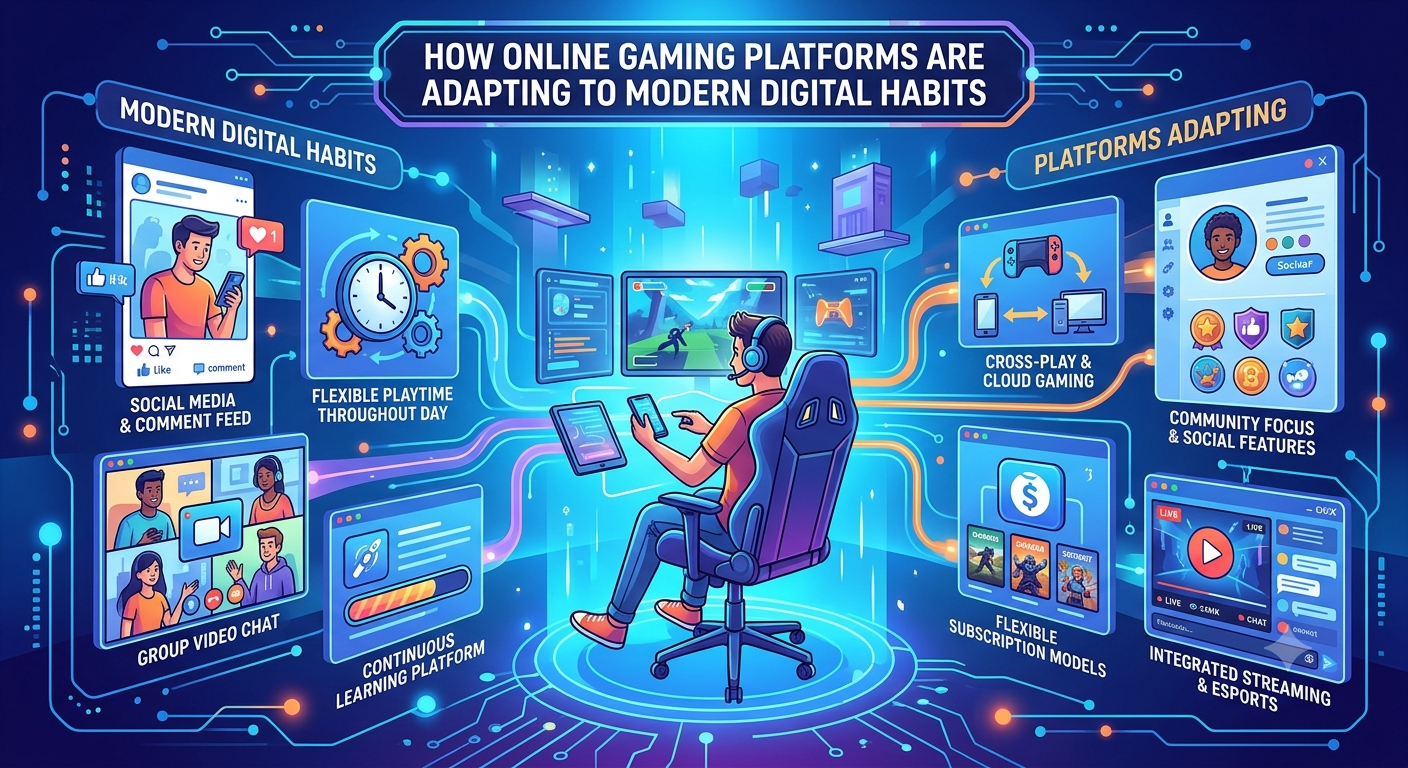
Online gaming platforms are changing alongside these habits. People now expect faster loading times, simple navigation, mobile-friendly interfaces, and better account security. They also want digital services that work comfortably with their everyday routines.
This shift has influenced how platforms develop their websites, mobile applications, and gaming features. It has also brought greater attention to privacy, accessibility, and responsible gaming.
Understanding these changes can help users evaluate online gaming services more carefully and make informed decisions about the platforms they use.
Why Are Online Gaming Habits Changing?
Modern gaming habits are closely connected to the increasing use of smartphones and internet-based services. Instead of depending entirely on desktop computers, many users now prefer digital entertainment that works on smaller screens.
Three important changes explain this shift.
Smartphones Have Become Everyday Entertainment Devices
Smartphones are no longer used only for calling, messaging, and browsing. They also support video streaming, social media, educational applications, and online games.
This has encouraged developers to create platforms that work across different screen sizes.
For example, someone using a gaming website on a smartphone may expect the same essential functions available on a desktop computer.
However, the layout must accommodate a smaller display. Buttons need enough space for touch controls, menus should remain readable, and important information must be easy to locate.
Users Prefer Shorter Gaming Sessions
Not everyone wants to spend several hours playing a game.
Some people prefer short sessions during their free time. This has increased interest in games that offer simple instructions, quick access, and controls that are easy to understand.
For developers, this means reducing unnecessary steps between opening a platform and reaching its main features.
However, short gaming sessions can become longer than intended. Session reminders and voluntary time limits are therefore useful features, especially on platforms involving real-money gaming.
Convenience Is Becoming a Major Priority
People regularly switch between devices and online services throughout the day.
A digital platform that is difficult to navigate or takes too long to load may struggle to meet these expectations.
Convenience now involves more than an attractive interface. It includes clear instructions, reliable performance, accessible information, and straightforward account management.
How MY Winbox Fits Into Changing Online Gaming Habits
The shift toward mobile entertainment has also influenced how users evaluate gaming services. Platforms associated with online casino-style entertainment, including MY Winbox, can be considered within this broader discussion of mobile accessibility, interface design, and digital account management.
However, individual platform features, licensing, and operating conditions should always be verified rather than assumed from marketing descriptions.
Mobile Accessibility and User Expectations
Mobile accessibility means that users can comfortably interact with a platform through their smartphones.
A mobile-friendly gaming service should provide:
Readable menus and instructions
Buttons suitable for touchscreen controls
Clear account and privacy settings
Pages that adjust to different screen sizes
Information that remains accessible without excessive scrolling
These features are important because smartphone users interact with websites differently from desktop users.
For example, a menu that looks perfectly organised on a laptop may become difficult to use on a smaller phone.
Developers must account for these differences during website and application development.
Why Clear Navigation Matters
Imagine opening a gaming platform and finding several confusing menus.
You might struggle to locate account settings, help information, or the platform's terms and conditions.
Clear navigation reduces this confusion.
Users should be able to identify important sections without repeatedly opening different pages.
This is particularly important for services involving financial transactions, where unclear information can lead to mistakes.
What Users Should Verify Before Creating an Account
Before registering with any gaming service, users should examine its basic information.
Important checks include:
Confirm the platform's legal status in your location.
Look for verifiable company and licensing information.
Read its privacy policy and account conditions.
Check the availability of customer support.
Understand any applicable age restrictions.
Review financial terms before entering payment information.
A well-organised website does not automatically mean that its operator is licensed, reliable, or legally authorised.
The Growing Importance of Mobile-Friendly Gaming Design
As smartphones become a common entertainment choice, interface design plays an increasingly important role. Developers must consider device performance, internet speed, and screen dimensions when building digital gaming experiences.
A visually attractive platform is useful only when its basic functions remain practical.
Responsive Design Across Different Devices
Responsive design allows a website to adjust its layout according to the device being used.
For instance, a desktop website may display several sections side by side. On a smartphone, those same sections may appear vertically.
This adjustment helps users read content and access controls without constantly zooming in.
Good responsive design also considers landscape and portrait orientations.
Faster Loading and Better Performance
Slow-loading pages can interrupt online entertainment.
Several technical factors influence performance, including image sizes, software design, server response times, and internet connectivity.
Developers can improve loading performance by reducing unnecessary animations, compressing visual assets, and limiting background activity.
Users can also take simple steps to improve their experience.
Closing unused applications, keeping device software updated, and checking internet connectivity may help address performance problems.
However, persistent problems can also originate from the platform's servers rather than the user's device.
Accessibility for Different Users
Accessibility is another important aspect of modern gaming design.
Not every user has the same visual, physical, or technical requirements.
Useful accessibility features may include adjustable text sizes, readable colour combinations, clear labels, and controls that do not depend entirely on precise movements.
These improvements can make digital platforms easier to understand and operate.
Mobile Applications Versus Browser-Based Gaming
One important decision users face is choosing between a downloadable application and a browser-based platform. Both approaches offer different benefits and limitations depending on the device, software requirements, and type of service.
Understanding the differences helps users make a more informed choice.
How Browser-Based Gaming Works
Browser-based gaming allows users to access a platform through software such as Chrome, Safari, or Firefox.
There is usually no need to install a separate application.
This approach can be convenient for people who prefer to limit the number of applications on their devices.
However, performance may depend on browser compatibility, internet stability, and the platform's technical design.
What Users Should Know About APK Files
Android applications can also be distributed through APK files.
An APK is an Android application package used to install software on compatible devices.
When users encounter searches such as Winbox Download APK, it is important to understand that an APK filename or download page does not establish that an application is authentic or safe.
Applications obtained outside established app stores may introduce additional security risks.
Before considering any APK installation, users should check:
The identity and reputation of the software publisher
The permissions requested by the application
The availability of official software updates
Security warnings displayed by the device
The legal status of the service being offered
Google warns that installing applications from unknown sources can put personal information and device security at risk.
Users should not disable security protections simply because an installation page asks them to do so.
Which Access Method Is More Suitable?
The comparison below explains the main differences.
Neither method is automatically safer in every situation.
The reliability of the operator, software security, and proper maintenance matter more than the access method alone.
How Online Gaming Platforms Are Addressing Digital Security
Convenience has become important, but security remains essential. Gaming accounts may contain personal details, login credentials, and, in some cases, financial information.
This makes account protection an important consideration for both developers and users.
Stronger Login and Authentication Systems
Modern online services increasingly use additional authentication methods to protect accounts.
Two-factor authentication, for example, requires another form of verification alongside a password.
This additional step can make unauthorised access more difficult.
Users should also avoid using the same password across multiple platforms.
A unique password and secure password manager can reduce the risk associated with leaked login credentials.
Understanding Website and Application Permissions
Some applications request access to device functions such as notifications, storage, or location.
Certain permissions may be needed for legitimate features, but others may be unnecessary.
Users should review permission requests and consider why an application needs particular information.
For instance, an ordinary gaming application requesting access to unrelated personal files deserves closer examination.
Recognising Suspicious Platform Behaviour
Users should exercise caution when encountering:
Unverified websites requesting sensitive information
Messages asking for passwords or verification codes
Unexpected application downloads
Pressure to make immediate payments
Requests to bypass device security warnings
These signs do not always prove fraudulent activity, but they provide good reasons to stop and investigate.
Why Personalisation Is Becoming More Common in Online Gaming
Online platforms increasingly adapt their interfaces and content based on user preferences. Personalisation can help people locate familiar settings and manage their experience more comfortably.
However, it also raises questions about information collection and responsible platform design.
How Personalised Interfaces Work
A personalised interface may display saved preferences, language settings, or frequently accessed sections.
For example, a user might select a preferred language and have that setting retained for future sessions.
This can reduce repeated adjustments.
Some systems also use account activity to make recommendations, although the exact methods differ between services.
The Importance of Data Privacy
Personalisation often involves collecting information about user activity.
Users should understand what information is gathered, why it is needed, and how long it may be retained.
A transparent privacy policy should explain these practices in understandable language.
It is also worth checking whether users can manage optional data collection or request account deletion.
Privacy should not be treated as a secondary concern simply because a platform offers convenient features.
Responsible Gaming and Better Digital Habits
As gaming becomes easier to access, responsible usage becomes increasingly important. Users need to understand how entertainment fits into their daily schedules and how certain platform features may influence their behaviour.
This is especially relevant when games involve money or chance-based outcomes.
Understanding the Difference Between Entertainment and Real-Money Gaming
Not all online games operate in the same way.
Some are played purely for entertainment, while others involve placing money at risk for uncertain outcomes.
Real-money casino games are not reliable methods of earning income. Their outcomes involve chance, and losses are possible.
Users should understand these differences before participating in any adult-only gaming activity.
They must also check local laws, as online gambling restrictions vary by jurisdiction.
Using Time and Spending Limits
Setting boundaries can help users maintain control over their entertainment habits.
Useful practices include:
Deciding how much time to spend before starting
Taking regular breaks from screens
Avoiding games during important responsibilities
Never treating gambling as a solution to financial difficulties
Using available account restrictions or self-exclusion tools when necessary
For real-money gaming, a spending limit should never exceed an amount the individual can afford to lose.
Why Age Restrictions Matter
Real-money gaming services must follow applicable age and licensing requirements.
Google Play, for example, permits approved real-money gambling applications only in eligible jurisdictions and requires measures to prevent underage access.
The availability of a website or application does not establish that participation is legal.
Young users should focus on age-appropriate entertainment services and educational gaming activities instead.
What Should Users Expect From Future Online Gaming Platforms?
Digital entertainment will continue changing as software, devices, and user preferences develop. However, useful improvements are not always about adding more visual effects or complicated features.
Many practical improvements focus on reliability, accessibility, and clearer information.
More Consistent Cross-Device Experiences
Users increasingly expect familiar settings and navigation when switching between devices.
Developers can support this by maintaining consistent menus, readable content, and compatible website layouts.
However, account syncing and feature availability may differ between services.
Greater Attention to User Control
Features such as notification settings, privacy controls, session reminders, and account restrictions can give users more control over their digital activities.
These tools are particularly valuable when they are easy to locate and understand.
Clearer Information About Platform Operations
Users benefit when services explain their rules, financial conditions, technical requirements, and account policies without confusing language.
For real-money gaming platforms, transparent information about licensing, game rules, withdrawals, and responsible gambling measures is especially important.
Users should treat missing or unverifiable information as a reason for caution.
Conclusion
The evolution of online gaming reflects broader changes in how people use digital technology. Smartphones, responsive websites, faster access, and personalised interfaces have influenced what users expect from entertainment platforms.
The discussion around modern online gaming services also illustrates why mobile convenience should be considered alongside security, legal requirements, privacy, and responsible gaming practices.
For users, the most important lesson is simple: a platform should be evaluated on more than its appearance or ease of access.
Understanding how digital gaming services operate, checking their legitimacy, protecting personal information, and maintaining healthy entertainment habits can help people make better decisions as online gaming technology continues to develop.